
Post Category : Method & Theory Special Finds
Muddy Lab Secrets

By Madeline Coleman on August 28, 2018
The mud we slog through in the field doesn’t always stay in the field. It’s wrapped around a lot of the artifacts we find, and ends up in our sample bags. Once we get back from the field, we start the process of washing all the artifacts. As the sediment is brushed away, some of the artifact’s secrets are slowly revealed!
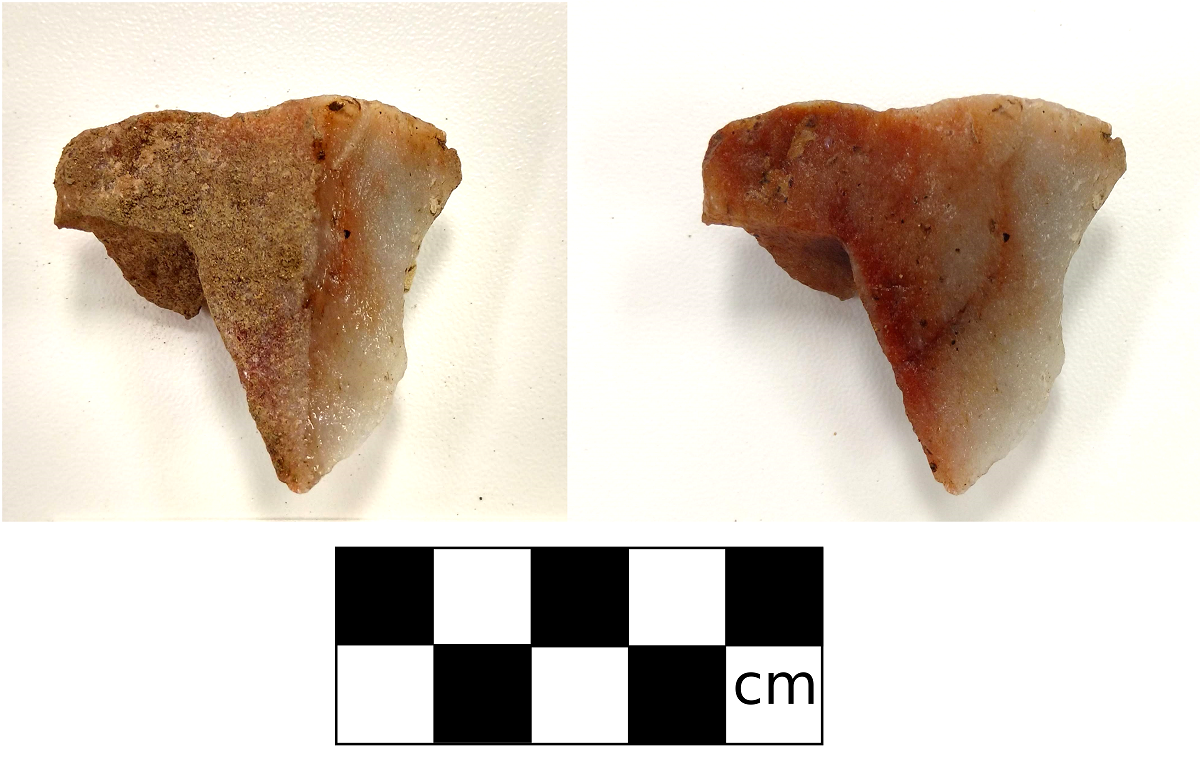
The mud can really hide what colour an artifact is. This flake was a dull grey brown until a “wet brush” made it’s way across one side. Underneath this layer is a beautiful pale quartzite that transitions into a orange-reddish pink the further washing was completed.
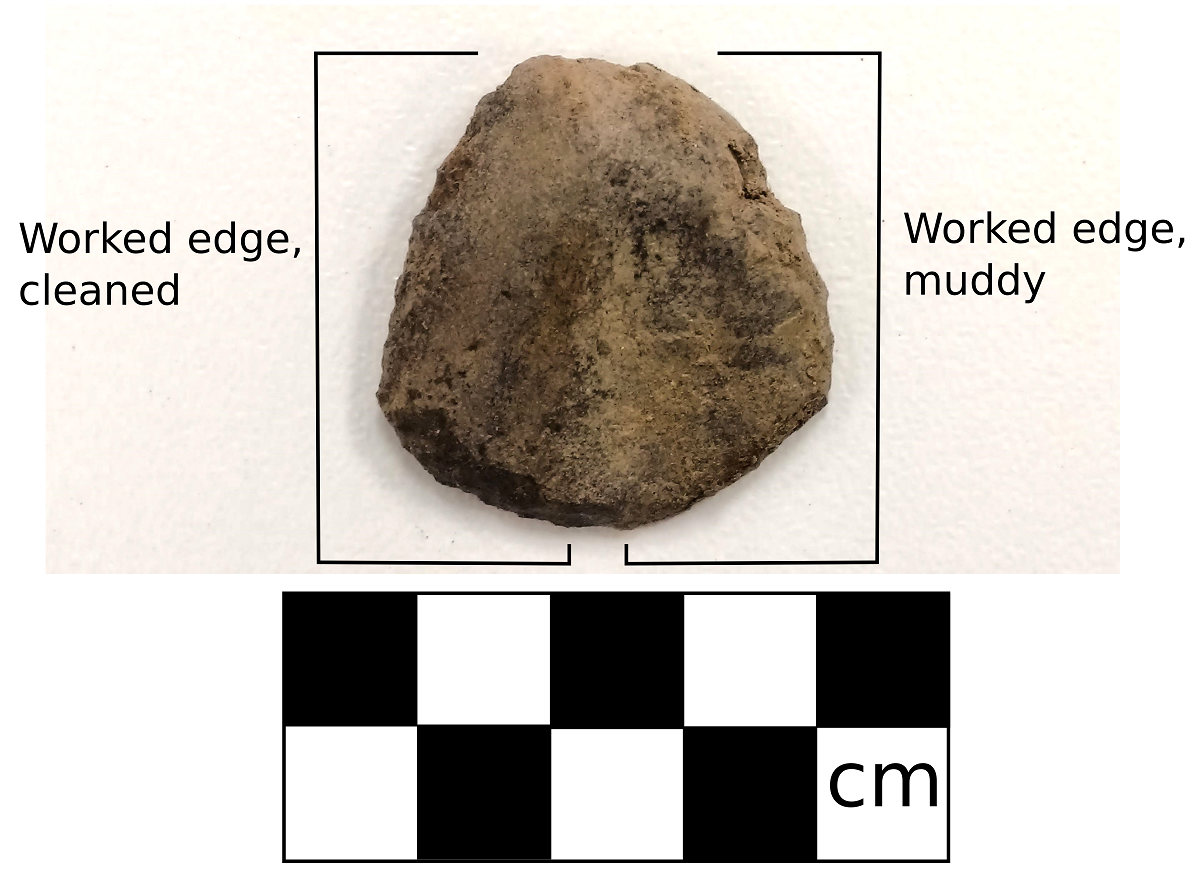
Washing all artifacts in water is not possible. Bone just absorbs the water, which makes it take longer to dry fully. Putting wet bone into a bag will ultimately end up destroying the artifact with mold. Tools we find in the field are also only “dry brushed”. This helps preserve any residue left on tools, which can be used in various residue analyses. A good brushing will help pull out little details though. This thumbnail scraper has been worked around almost its entire edge. The brushing (left) really helps it stand out.
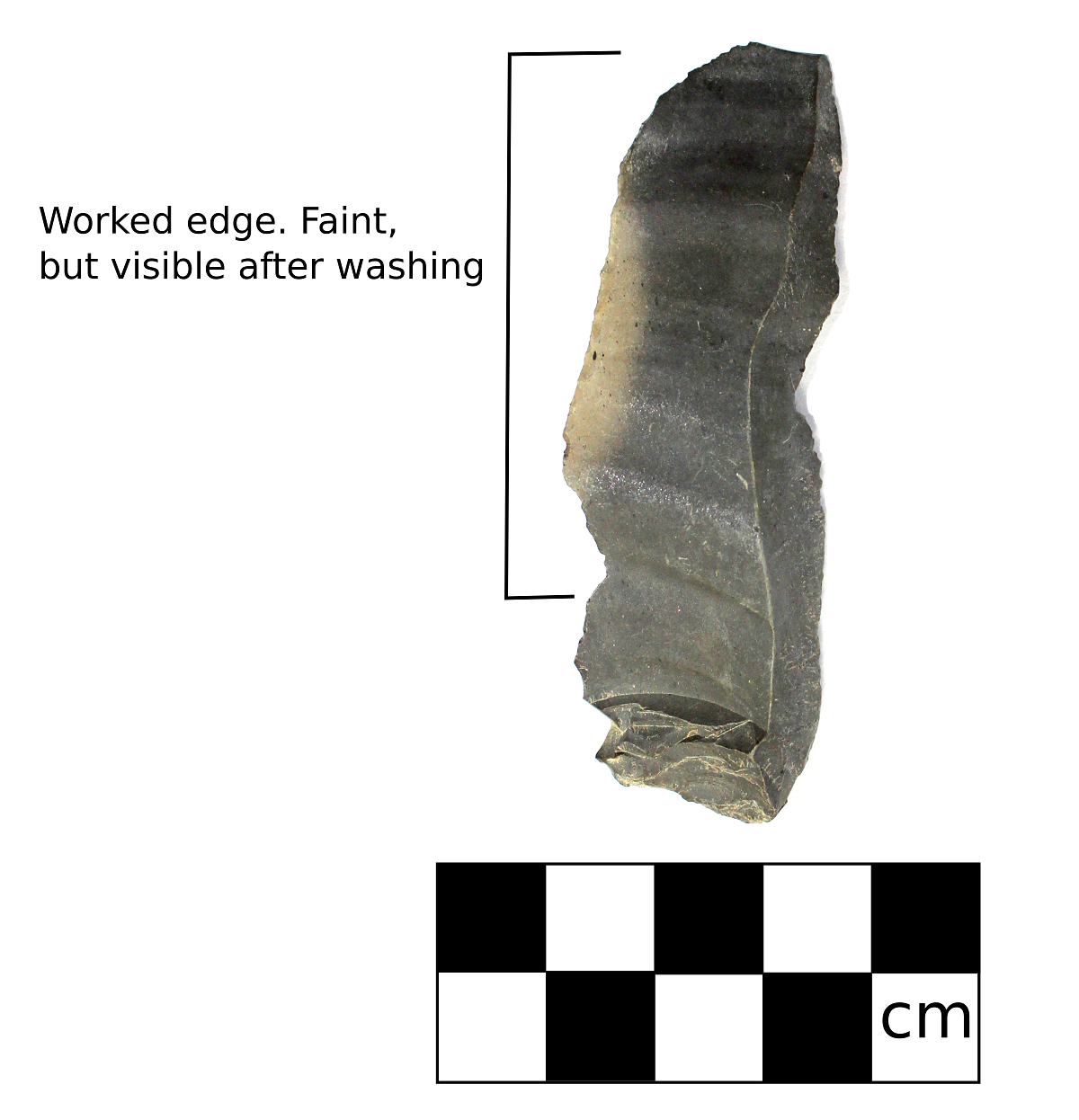
Sometimes, however, a tool is only discovered after washing the mud away. Retouched flakes (as opposed to a formed tool) are often only discovered as the edges are cleaned, allowing the knapped edge to be fully exposed. The same goes for a utilized flake. These are flakes that look like a regular flake, but with closer inspection the edge has been chipped and worn from use. These are often called expedient tools. The flake’s sharp edge is used until it is dull, after which it is discarded.
Related Posts

By Hailey Kennedy

August 6, 2026
The Archaeology of Kintsugi
What is Kintsugi? Kintsugi (gold joinery), is a term often used to refer to the Japanese method of mending objects by combining lacquer or adhesive with liquid gold or other precious metals. Today, the practice is most commonly associated with ceramics as it often transforms cracked or broken vessels into works of art. Kintsugi often
Keep Reading
By Fallon Hardie
February 12, 2025
Culturally Modified Trees of the Interior, British Columbia
A Foreword For the Archaeologists who’ve found themselves interested in the niches of Ecology and Landscape-Use-Dynamics, we tend to recognize the landscape as a dynamic whole; a manuscript of activities, knowledge, and ideologies that human societies have crafted and applied to the environments in which they live. However, Professional Consulting Archaeologists in Cultural Resource Management
Keep Reading
By Braedy Chapman
July 2, 2023
Top sites of 2022, BC edition
Field operations in British columbia 2022 marked Ember Archaeology’s first year of significant field operations in British Columbia. Our BC crews conducted a number of sizable wildfire-related projects for the BC Ministry of Forests over the course of the season, ultimately surveying hundreds of kilometers of constructed fireguards and fuel reduction developments. These were nearly
Keep Reading